Tesla Powerwall 3 vs. FranklinWH: Choosing the Right Battery Storage System
Adding battery storage to a residential solar installation gives homeowners control over energy independence, grid backup, and utility bill management. With utilities in New Jersey, New York, and California shifting toward complex time-of-use (TOU) rates and reduced net-metering credits, pairing rooftop photovoltaic panels with energy storage has become essential. Two premium technologies lead the market today: the Tesla Powerwall 3 and the FranklinWH aPower system. Evaluating a detailed Tesla Powerwall 3 FranklinWH comparison helps homeowners select the ideal storage architecture for their specific energy demands.
Core Architecture and Integrated Inverter Technology
Understanding how each battery processes solar electricity is fundamental when reviewing any Tesla Powerwall 3 FranklinWH comparison.
Tesla Powerwall 3 Architecture
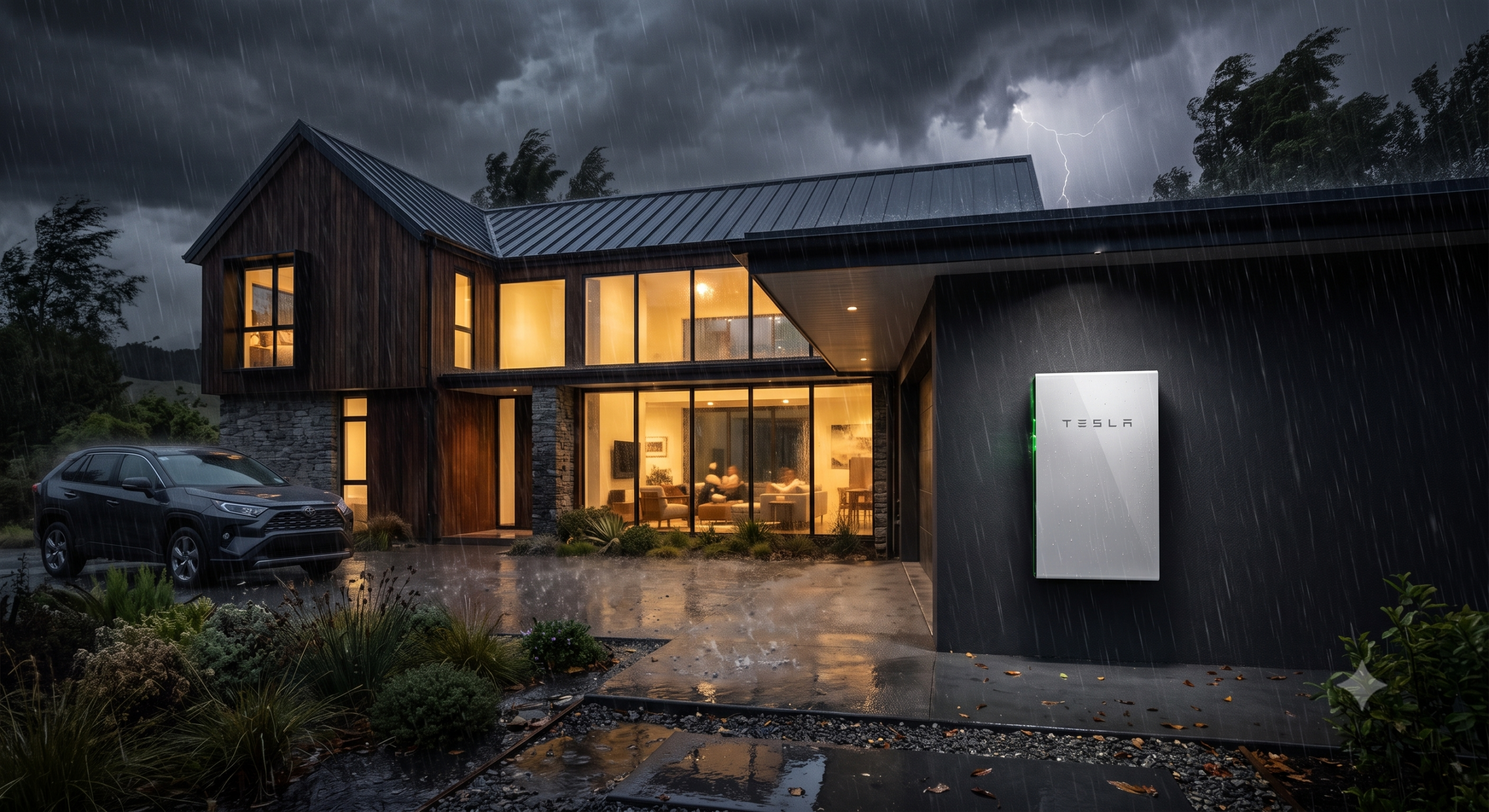
The Tesla Powerwall 3 features an integrated hybrid solar inverter capable of supporting up to six solar strings directly. This design simplifies new installations by eliminating the need for a separate standalone PV inverter. Delivering up to 11.5 kW of continuous power output per unit, the Powerwall 3 can start heavy motor loads—such as central air conditioners and heat pumps—without auxiliary soft-starter hardware.
FranklinWH Energy Management System
The FranklinWH system uses a modular approach consisting of the aPower battery unit and the aGate intelligent energy management controller. Unlike integrated hybrid systems, FranklinWH functions seamlessly with both AC and DC coupling configurations. This flexibility allows it to pair effortlessly with existing microinverter systems (such as Enphase) or legacy string inverters without altering existing solar panel wiring.
Key Metrics: Power Output, Capacity, and Scalability
Evaluating technical specifications ensures your energy storage capacity aligns with household consumption patterns during extended utility grid outages.
- Continuous Power Output: In a direct Tesla Powerwall 3 FranklinWH comparison, the Powerwall 3 offers 11.5 kW of continuous output per unit, whereas a single FranklinWH aPower unit delivers 5 kW continuous power (with an 80-amp peak surge capacity for starting heavy equipment).
- Storage Capacity: The Powerwall 3 holds 13.5 kWh of usable energy per unit. FranklinWH provides 13.6 kWh of usable energy per aPower enclosure, offering nearly identical base storage volumes.
- System Expansion: FranklinWH excels in modular scalability, allowing homeowners to link up to 15 aPower units to a single aGate controller (over 200 kWh of total storage). The Powerwall 3 allows stackable expansion with additional DC expansion units to scale energy capacity as household requirements grow.
Generator Integration and Smart Load Control
A critical differentiator highlighted in every comprehensive Tesla Powerwall 3 FranklinWH comparison is how each system manages auxiliary generator power and home circuits during prolonged power blackouts.
The FranklinWH aGate controller features built-in smart circuits and built-in standby generator management. It can automatically manage non-essential loads (such as electric vehicle chargers or hot tubs) while managing a backup gas or diesel generator when solar generation is insufficient during multi-day coastal storms.
The Tesla Powerwall 3 manages load shedding through its integrated software ecosystem, prioritizing essential circuits while utilizing Tesla’s companion app for real-time monitoring, storm watch automated charging, and energy arbitrage management.
Selecting the Optimal System for Your Property
Determining the winner of a Tesla Powerwall 3 FranklinWH comparison depends entirely on your property’s existing infrastructure and long-term energy goals:
- Choose Tesla Powerwall 3 if you are installing a new solar-plus-storage system, desire maximum continuous power output from a single enclosure, and prefer a sleek, fully integrated hybrid inverter setup.
- Choose FranklinWH if you are retrofitting storage onto an existing solar array, require advanced generator integration, or need granular smart-load management across multiple high-draw household appliances.
Partner with Certified Energy Storage Specialists
Selecting and sizing residential battery backup systems requires precise engineering calculations based on peak electrical loads and local utility interconnect standards. Serving homes across New Jersey, New York, and Southern California since 2003, Sea Bright Solar provides NABCEP-certified design, technical guidance, and expert installation.
Empower your home with reliable, uninterrupted power. Contact our technical team today for a Free Quote to analyze your backup requirements and receive a customized battery storage recommendation.